

“For most of my life, Budapest has been my home. Over the past four years, I’ve started looking forward to autumn. In summer, temperatures sometimes rise up to 43 °C, making it especially unbearable in the city center, surrounded by all that concrete.
I live in the outer part of the city, where it’s still more comfortable, but even we had to install air conditioning in our apartment because summer temperatures inside sometimes didn’t drop below 28 °C. Even though it’s more pleasant where I live than downtown, taking the bus without air conditioning is often exhausting.
In 2024, I attended the Pride demonstration through the city center. It was 40 °C with very little shade, and an ambulance had to be called several times. At least water was being distributed.”
— Anna Léda Heidrich, 17 years old (2025)
RISING HEAT IN HUNGARY
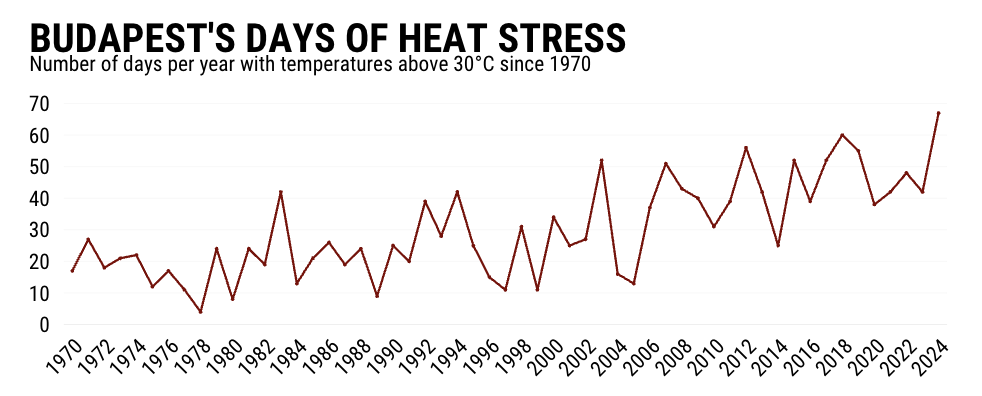
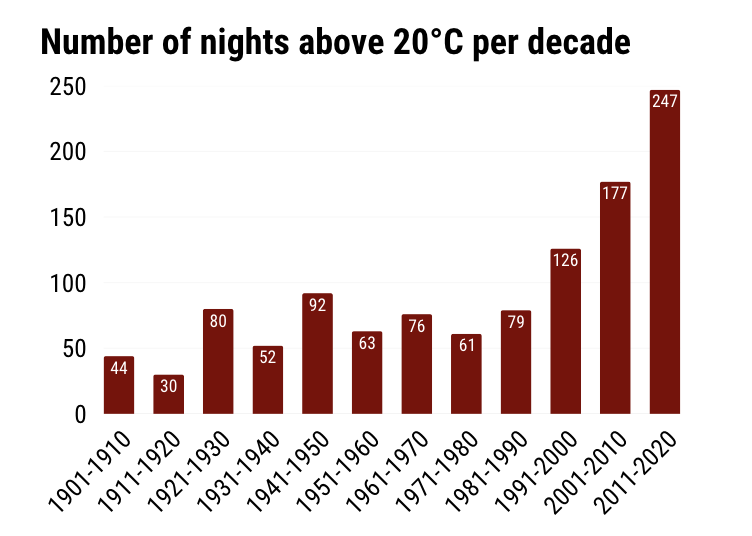
Since 1901, Hungary’s annual average temperature has risen by 4 °C. In the summers of 2021, 2022, 2023, and 2024, extreme heatwaves occurred. In 2021, temperatures did not drop below 27 °C for over one and a half months. Budapest experiences particularly high temperatures.¹
HEALTH RISKS OF HEAT
Heat places significant strain on the human body and can lead to cardiovascular problems. Continuous heat, such as tropical nights during heatwaves, overloads the body’s cooling system. Older people and those with pre-existing conditions are at especially high risk. It is clear that extreme heat also increases mortality rates. Social services in Budapest are sounding the alarm, as heat can be life-threatening for many homeless people. Limited access to cooling and washing facilities—problems that exist year-round—make coping with the heat even more difficult.⁶
Quellen: