“The environmental conditions of tomorrow will differ significantly from those of yesterday due to climate change. Forests must become more resilient to adapt to the future and to climate change. It is expected that forests will face higher risks from extreme weather events, as well as new pests and diseases that threaten their health.
We need to carefully consider how we manage our forest areas. Otherwise, there will not be enough to meet all our needs. Sustainable forest management, reforestation, and the use of wood as a renewable resource are effective measures against rising CO₂ levels in our atmosphere. Moreover, there are many growing demands on the ecosystem services and functions that forests provide. For example, we want them to offer habitats and natural ecosystems for biodiversity, as well as a range of other important benefits such as erosion control, protection from avalanches and rockfall, groundwater protection, mushrooms and berries, hiking, camping, and hunting.”
– Palle Madsen, Head and Owner of the Private Forestry Research Company Innovasilva (2025)
Sick from climate change
The “green beech trees all around,” celebrated in the Danish national anthem, along with other tree species in Denmark, are particularly vulnerable in a warmer climate. Globally, tree diseases are spreading more rapidly, and unknown pests and pathogens are threatening forests. For example, parasites of the genus Phytophthora pose a major, yet unpredictable, threat to Danish tree species. The increase in extreme weather events due to climate change is also causing more frequent wildfires and severe storms, destroying entire forest areas.
Biodiversity Loss in Denmark
Denmark had set a goal to halt biodiversity loss by 2020. This goal was not achieved. Although the rate of loss has slowed, it is still estimated that 51% of species continue to decline. Only 12% of species are stable or increasing. Protected areas alone are not sufficient to stop species loss; regulations for industry and international cooperation are needed to preserve habitats.¹
Denmark as a pioneer in forest and biodiversity conservation
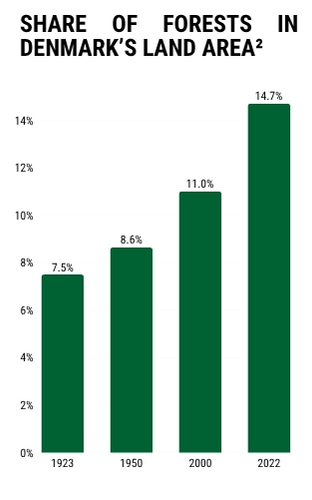
Since 1923, Denmark’s forest cover has doubled. Over the next two decades, the planting of one billion trees is planned. About 10% of current agricultural land is to be re-naturalized. This initiative is intended not only to help the climate but also to make a significant contribution to biodiversity conservation.³